Family Owned Homemade Peanut Brittle Made in Eagle Pass Texas
| Peanut | |
|---|---|
 | |
Scientific classification  | |
| Kingdom: | Plantae |
| Clade: | Tracheophytes |
| Clade: | Angiosperms |
| Clade: | Eudicots |
| Clade: | Rosids |
| Order: | Fabales |
| Family unit: | Fabaceae |
| Subfamily: | Faboideae |
| Genus: | Arachis |
| Species: | A. hypogaea |
| Binomial name | |
| Arachis hypogaea L. | |
| Subspecies and varieties | |
| |
| Synonyms[i] | |
| |
The peanut, also known equally the groundnut,[2] goober (US),[3] pindar (United states of america)[3] or monkey nut (United kingdom), and taxonomically classified as Arachis hypogaea, is a legume crop grown mainly for its edible seeds. It is widely grown in the tropics and subtropics, being important to both small and big commercial producers. It is classified as both a grain legume[iv] and, due to its high oil content, an oil crop.[5] World annual production of shelled peanuts was 44 million tonnes in 2016, led by Red china with 38% of the globe total. Atypically amongst legume crop plants, peanut pods develop hush-hush (geocarpy) rather than higher up ground. With this characteristic in mind, the botanist Carl Linnaeus gave peanuts the specific epithet hypogaea, which ways "nether the earth".
The peanut belongs to the botanical family Fabaceae (or Leguminosae), commonly known as the legume, bean, or pea family.[i] Like virtually other legumes, peanuts harbor symbiotic nitrogen-fixing bacteria in root nodules.[vi] The capacity to fix nitrogen means peanuts require less nitrogen-containing fertilizer and improve soil fertility, making them valuable in ingather rotations.
Peanuts are similar in taste and nutritional profile to tree nuts such as walnuts and almonds, and, equally a culinary nut, are often served in similar ways in Western cuisines. The botanical definition of a nut is "a fruit whose ovary wall becomes hard at maturity". Using this criterion, the peanut is non a nut.[7] Yet, peanuts are usually categorized as nuts for culinary purposes and in common English more mostly.

History
The Arachis genus is endemic to South America.[8] Cultivated peanuts (A. hypogaea) arose from a hybrid between two wild species of peanut, idea to be A. duranensis and A. ipaensis.[eight] [9] [10] The initial hybrid would accept been sterile, just spontaneous chromosome doubling restored its fertility, forming what is termed an amphidiploid or allotetraploid.[8] Genetic analysis suggests the hybridization may have occurred only once and gave rise to A. monticola, a wild course of peanut that occurs in a few limited locations in northwestern Argentina, or in southeastern Bolivia, where the peanut landraces with the most wild-like features are grown today.[11] and by bogus selection to A. hypogaea.[8] [ix]
The procedure of domestication through artificial selection made A. hypogaea dramatically different from its wild relatives. The domesticated plants are bushier and more compact, and take a different pod structure and larger seeds. From this primary center of origin, cultivation spread and formed secondary and tertiary centers of diversity in Peru, Ecuador, Brazil, Paraguay, and Uruguay. Over time, thousands of peanut landraces evolved; these are classified into half-dozen botanical varieties and ii subspecies (as listed in the peanut scientific classification table). Subspecies A. h. fastigiata types are more upright in their growth habit and have shorter crop cycles. Subspecies A. h. hypogaea types spread more than on the ground and have longer crop cycles.[11]
The oldest known archeological remains of pods accept been dated at about 7,600 years onetime, possibly a wild species that was in tillage, or A. hypogaea in the early on phase of domestication.[12] They were found in Peru, where dry climatic conditions are favorable for the preservation of organic cloth. Almost certainly, peanut cultivation antedated this at the center of origin where the climate is moister. Many pre-Columbian cultures, such as the Moche, depicted peanuts in their art.[13] Cultivation was well-established in Mesoamerica earlier the Castilian arrived. In that location, the conquistadors found the tlālcacahuatl (the plant's Nahuatl name, hence the name in Spanish cacahuete) offered for auction in the marketplace of Tenochtitlan. The peanut was later spread worldwide by European traders, and tillage is at present widespread in tropical and subtropical regions. In West Africa, it substantially replaced a crop establish from the same family, the Bambara groundnut, whose seed pods too develop underground.[ commendation needed ] In Asia, it became an agricultural mainstay and this region is now the largest producer in the world.[14]
In the English-speaking globe, peanut growing is most of import in the United states of america. It was mainly a garden crop for much of the colonial period, before shifting to mostly animal feedstock until human consumption grew in the 1930s.[15] The Us Department of Agriculture initiated a program to encourage agricultural production and human consumption of peanuts in the late 19th and early on 20th centuries.[15]
Peanut butter was developed in the 1880s and 1890s in the United states and Canada.[16]
Botany

The peanut is an annual herbaceous found growing 30 to l cm (12 to 20 in) alpine.[15] As a legume, it belongs to the botanical family Fabaceae (likewise known as Leguminosae, and unremarkably known as the legume, edible bean, or pea family unit).[1] Like most other legumes, peanuts harbor symbiotic nitrogen-fixing bacteria in their root nodules.[6]
The leaves are opposite and pinnate with four leaflets (two opposite pairs; no terminal leaflet); each leaflet is i to 7 centimetres ( 1⁄2 to two+ iii⁄4 in) long and 1 to three cm ( 1⁄2 to i+ one⁄4 in) across. Like those of many other legumes, the leaves are nyctinastic; that is, they take "sleep" movements, closing at night.
The flowers are 1 to 1.five cm ( 3⁄eight to five⁄viii in) beyond, and yellowish orange with crimson veining.[11] [xv] They are borne in axillary clusters on the stems above basis, and last for just 1 day. The ovary is located at the base of what appears to be the flower stem, simply is actually a highly elongated floral cup.
Peanut fruits develop underground, an unusual feature known as geocarpy.[17] Afterward fertilization, a short stalk at the base of the ovary (ofttimes termed a gynophore, but which actually appears to exist part of the ovary itself) elongates to form a thread-like construction known as a "peg". This peg grows down into the soil, assuasive the fruit to develop secret.[17] These pods (technically called legumes) are iii to 7 centimetres (1 to iii in) long, ordinarily containing one to four seeds.[xi] [15] The beat out of the peanut fruit consists primarily mesocarp with several large veins traversing its length.[17]
Parts

Parts of the peanut include:
- Trounce - outer covering, in contact with clay
- Cotyledons (two) - principal edible role
- Seed coat - brown newspaper-like covering of the edible part
- Radicle - embryonic root at the bottom of the cotyledon, which can be snapped off
- Plumule - embryonic shoot emerging from the acme of the radicle
Cultivation

Peanut pegs growing into the soil. The tip of the peg, one time cached, swells and develops into a peanut fruit.
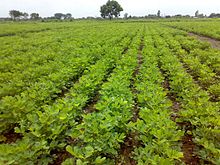

Peanuts grow all-time in lite, sandy loam soil with a pH of 5.9–7. Their capacity to set nitrogen means that, providing they nodulate properly, peanuts benefit trivial or non at all from nitrogen-containing fertilizer,[18] and they better soil fertility. Therefore, they are valuable in crop rotations. Also, the yield of the peanut crop itself is increased in rotations, through reduced diseases, pests and weeds. For case, in Texas, peanuts in a 3-yr rotation with corn yield 50% more than than nonrotated peanuts.[eighteen] Acceptable levels of phosphorus, potassium, calcium, magnesium, and micronutrients are also necessary for good yields.[18] To develop well, peanuts need warm weather throughout the growing season. They can be grown with as little as 350 mm (14 in) of h2o,[xix] simply for best yields need at least 500 mm (xx in).[20] Depending on growing conditions and the cultivar of peanut, harvest is commonly 90 to 130 days after planting for subspecies A. h. fastigiata types, and 120 to 150 days afterward planting for subspecies A. h. hypogaea types.[xix] [21] [22] Subspecies A. h. hypogaea types yield more, and are usually preferred where the growing seasons are sufficiently long.
Peanut plants continue to produce flowers when pods are developing; therefore even when they are ready for harvest, some pods are immature. In order to maximize yield, the timing of harvest is important. If it is too early, as well many pods will exist unripe; if too late, the pods will snap off at the stem, and volition remain in the soil.[23] For harvesting, the unabridged plant, including most of the roots, is removed from the soil.[23] The pods are covered with a network of raised veins and are constricted between seeds.
The main yield limiting factors in semiarid regions are drought and high temperature stress. The stages of reproductive development prior to flowering, at flowering and at early pod development, are particularly sensitive to these constraints. Apart from N, P and M, other nutrient deficiencies causing significant yield losses are Ca, Fe and B. Biotic stresses mainly include pests, diseases and weeds. Amid insects pests pod borers, aphids and mites are of importance. The most of import diseases are leaf spots, rusts and the toxin-producing fungus Aspergillus.[24]
Harvesting occurs in two stages.[25] [ self-published source? ] In mechanized systems, a automobile is used to cutting off the main root of the peanut constitute by cutting through the soil just below the level of the peanut pods. The machine lifts the "bush" from the basis and shakes it, then inverts the bush, leaving the plant upside downwards on the ground to keep the peanuts out of the soil. This allows the peanuts to dry slowly to a picayune less than a tertiary of their original moisture level over a flow of 3 to iv days. Traditionally, peanuts were pulled and inverted by hand.
After the peanuts have dried sufficiently, they are threshed, removing the peanut pods from the rest of the bush-league.[23] Information technology is peculiarly of import that peanuts are dried properly and stored in dry weather. If they are too high in moisture, or if storage weather are poor, they may become infected by the mold mucus Aspergillus flavus. Many strains of this mucus release toxic and highly carcinogenic substances chosen aflatoxins.
Cultivars in the United States
There are many peanut cultivars grown around the world. The market classes grown in the United States are Spanish, Runner, Virginia, and Valencia.[26] Peanut production in the United States is divided into three major areas: the southeastern U.s. region which includes Alabama, Georgia, and Florida; the southwestern United States region which includes New United mexican states, Oklahoma, and Texas; and the third region in the general eastern The states which includes Virginia, Northward Carolina, and South Carolina.[26] In Georgia, Naomi Chapman Woodroof is responsible for developing the convenance program of peanuts resulting in a harvest about five times greater.[27]
Sure cultivar groups are preferred for particular characteristics, such as differences in flavor, oil content, size, shape, and disease resistance.[25] Most peanuts marketed in the shell are of the Virginia type, along with some Valencias selected for big size and the attractive appearance of the shell. Spanish peanuts are used mostly for peanut candy, salted nuts, and peanut butter.
Spanish group
The small-scale Castilian types are grown in South Africa, and in the southwestern and southeastern Usa. Until 1940, 90% of the peanuts grown in the Usa state of Georgia were Castilian types, but the tendency since so has been larger-seeded, higher-yielding, more disease-resistant cultivars. Castilian peanuts have a college oil content than other types of peanuts. In the United States, the Spanish group is primarily grown in New Mexico, Oklahoma, and Texas.[26]
Cultivars of the Spanish group include 'Dixie Spanish', 'Improved Spanish 2B', 'GFA Spanish', 'Argentine', 'Spantex', 'Spanette', 'Shaffers Spanish', 'Natal Common (Spanish)', "White Kernel Varieties', 'Starr', 'Comet', 'Florispan', 'Spanhoma', 'Spancross', 'OLin', 'Tamspan 90', 'AT 9899–14', 'Spanco', 'Wilco I', 'GG ii', 'GG 4', 'TMV 2', and 'Tamnut 06'.
Runner group
Since 1940, the southeastern US region has seen a shift to production of Runner group peanuts. This shift is due to proficient flavor, better roasting characteristics and college yields when compared to Spanish types, leading to food manufacturers' preference for the employ in peanut butter and salted basics. Georgia'due south production is at present almost 100% Runner type.[25]
Cultivars of Runners include 'Southeastern Runner 56-15', 'Dixie Runner', 'Early on Runner', 'Virginia Bunch 67', 'Bradford Runner', 'Egyptian Giant' (also known as 'Virginia Agglomeration' and 'Giant'), 'Rhodesian Castilian Bunch' (Valencia and Virginia Bunch), 'North Carolina Runner 56-15', 'Florunner', 'Virugard', 'Georgia Green', 'Tamrun 96', 'Flavor Runner 458', 'Tamrun OL01', 'Tamrun OL02' 'AT-120', 'Andru-93', 'Southern Runner', 'AT1-i', 'Georgia Brown', 'GK-seven', and 'AT-108'.
Virginia group
The large-seeded Virginia group peanuts are grown in the United states of america states of Virginia, Northward Carolina, Tennessee, Texas, New United mexican states, Oklahoma, and parts of Georgia. They are increasing in popularity due to demand for large peanuts for processing, specially for salting, confections, and roasting in the shells.
Virginia group peanuts are either agglomeration or running in growth habit. The bunch type is upright to spreading. Information technology attains a elevation of 45 to 55 cm (xviii to 22 in), and a spread of 70 to fourscore cm (28 to 31 in), with lxxx to xc cm (31 to 35 in) rows that seldom encompass the ground. The pods are borne within five to 10 cm (2 to iv in) of the base of the establish.
Cultivars of Virginia type peanuts include 'NC vii', 'NC ix', 'NC 10C', 'NC-V xi', 'VA 93B', 'NC 12C', 'VA-C 92R', 'Gregory', 'VA 98R', 'Perry', 'Wilson, 'Hull', 'AT VC-2' and' Shulamit'.
Valencia group
Valencia group peanuts are fibroid, and they have heavy cherry stems and large leafage. In the U.s., large commercial production is primarily in the South Plains of Due west Texas, and in eastern New Mexico nigh and s of Portales, only they are grown on a small-scale calibration elsewhere in the South equally the best-flavored and preferred type for boiled peanuts. They are comparatively alpine, reaching a height of 125 cm (49 in) and a spread of 75 cm (30 in). Peanut pods are borne on pegs arising from the main stem and the side branches. Most of the pods are clustered around the base of the establish, and only a few are found several inches away. Valencia types are three- to five-seeded and shine, with no constriction of the trounce between the seeds. Seeds are oval and tightly crowded into the pods. Typical seed weight is 0.four to 0.5 g. This blazon is used heavily for sale roasted and salted in-shell peanuts, and for peanut butter. Varieties include 'Valencia A' and 'Valencia C'.
Tennessee Red and Tennessee White groups
These are alike, except for the color of the seed. Sometimes known likewise as Texas Ruddy or White, the plants are similar to Valencia types, except the stems are green to greenish brown, and the pods are rough, irregular, and have a smaller proportion of kernels.
Production
| Peanut production, 2019 (millions of tonnes) | |
|---|---|
| Country | Production |
 China China | 17.5 |
 Republic of india Republic of india | half dozen.7 |
 Nigeria Nigeria | four.iv |
 Sudan Sudan | 2.8 |
 United states United states | 2.5 |
| Globe | 48.8 |
| Source: FAOSTAT, United Nations[14] | |
In 2019, world production of peanuts (reported equally groundnuts in shells) was 49 million tonnes, a 7% increase over 2018 production.[fourteen] China had 36% of global production, followed by Republic of india (14%) (table). Other pregnant producers were Nigeria, Sudan, and the United States.[14]
Food

A consumer picking peanuts


Whole peanuts

Roasted peanuts as snack food
Dry-roasting peanuts is a common form of preparation. Dry peanuts can be roasted in the shell or shelled in a dwelling house oven if spread out one layer deep in a pan and baked at a temperature of 177 °C (351 °F) for 15 to twenty min (shelled) and twenty to 25 min (in shell).
Boiled peanuts are a popular snack in India, People's republic of china, West Africa, and the southern United States. In the US S, boiled peanuts are often prepared in briny water, and sold in streetside stands.
A stardom can be drawn between raw and dark-green peanuts. A green peanut is a term to describe farm fresh harvested peanuts that accept not been dehydrated. They are available from grocery stores, food distributors and farmers markets, during the growing flavour. Raw peanuts are likewise uncooked but have been dried/dehydrated and must exist rehydrated before boiling (usually in a basin full of h2o overnight). Once rehydrated, the raw peanuts are set up to be boiled.[28]
Peanut oil
Peanut oil is often used in cooking, considering it has a mild flavor and a relatively high smoke point. Due to its high monounsaturated content, it is considered more healthful than saturated oils, and is resistant to rancidity. The several types of peanut oil include aromatic roasted peanut oil, refined peanut oil, extra virgin or cold-pressed peanut oil, and peanut excerpt. In the United States, refined peanut oil is exempt from allergen labeling laws.[29]
Peanut butter
Peanut butter is a food paste or spread made from ground dry roasted peanuts. It often contains additional ingredients that modify the taste or texture, such as salt, sweeteners or emulsifiers. Peanut butter is served as a spread on bread, toast or crackers, and used to brand sandwiches (notably the peanut butter and jelly sandwich). It is as well used in a number of confections, such as peanut-flavored granola bars or croissants and other pastries. The Usa[30] is a leading exporter of peanut butter, and itself consumes $800 million of peanut butter annually.[31]
Peanut flour
Peanut flour is used in gluten-free cooking.
Peanut proteins
Peanut protein concentrates and isolates are commercially produced from defatted peanut flour using several methods. Peanut flour concentrates (about lxx% poly peptide) are produced from dehulled kernels by removing virtually of the oil and the h2o-soluble, non-protein components. Hydraulic pressing, screw pressing, solvent extraction, and pre-pressing followed by solvent extraction may be used for oil removal, later which protein isolation and purification are implemented.[32]
Cuisine


Boiled groundnuts (peanuts)
Latin America
Peanuts are particularly common in Peruvian and Mexican cuisine, both of which marry indigenous and European ingredients. For instance, in Republic of peru, a popular traditional dish is picante de cuy,[33] a roasted guinea grunter served in a sauce of ground peanuts (ingredients native to South America) with roasted onions and garlic (ingredients from European cuisine). Also, in the Peruvian metropolis of Arequipa, a dish called ocopa consists of a smooth sauce of roasted peanuts and hot peppers (both native to the region) with roasted onions, garlic, and oil, poured over meat or potatoes.[34] Another instance is a fricassee combining a like mixture with sautéed seafood or boiled and shredded craven. These dishes are generally known as ajíes, meaning "hot peppers", such as ají de pollo and ají de mariscos (seafood ajíes may omit peanuts). In Mexico it is likewise used to prepare unlike traditional dishes, such as chicken in peanut sauce (encacahuatado) and is used as a main ingredient for the training of other famous dishes such as red pipián, mole poblano and oaxacan mole negro. [35]
Too, during colonial times in Peru, the Spanish used peanuts to replace nuts unavailable locally, but used extensively in Spanish cuisine, such as almonds and pine basics, typically ground or as paste mixed with rice, meats, and vegetables for dishes like rice pilaf.
Throughout the region, many candies and snacks are fabricated using peanuts. In Mexico, it is mutual to discover them in unlike presentations as a snack or processed: salty, "Japanese" peanuts, praline, enchilados or in the form of a traditional sugariness fabricated with peanuts and honey chosen palanqueta, and even as peanut marzipan.
West Asia
Crunchy coated peanuts, chosen kabukim in Hebrew, are a popular snack in Israel. Kabukim are usually sold by weight at corner stores where fresh nuts and seeds are sold, though they are also available packaged. The coating typically consists of flour, salt, starch, lecithin, and sometimes sesame seeds. The origin of the proper name is obscure (it may be derived from kabuk which ways nutshell or husk in Turkish). An boosted variety of crunchy coated peanuts popular in Israel is "American peanuts". The coating of this diversity is thinner, but harder to fissure.
Bamba puffs are a popular snack in Israel. Their shape is like to Cheez Doodles, but they are made of peanuts and corn.
Southeast Asia

Fried peanuts in the Philippines
Peanuts are too widely used in Southeast Asian cuisine, such as in Malaysia, Vietnam, and Indonesia, where they are typically made into a spicy sauce. Peanuts originally came to Indonesia from the Philippines, where the legume derived from Mexico in times of Spanish colonization. I Philippine dish using peanuts is kare-kare, a mixture of meat and peanut butter. Apart from being used in dishes, fried shelled peanuts are a common inexpensive snack in the Philippines with the peanuts commonly served plain salted with garlic chips and variants including adobo and chilli flavors.
Common Indonesian peanut-based dishes include gado-gado, pecel, karedok, and ketoprak, vegetable salads mixed with peanut sauce, and the peanut-based sauce, satay.
Indian subcontinent
In the Indian subcontinent, peanuts are a low-cal snack, normally roasted and salted (sometimes with the addition of chilli powder), and often sold roasted in pods or boiled with common salt. They are also fabricated into dessert or sweet snack of peanut brittle by processing with refined sugar and jaggery. Indian cuisine uses roasted, crushed peanuts to give a crunchy body to salads; they are added whole (without pods) to leafy vegetable stews for the aforementioned reason. Another apply is peanut oil for cooking. Nearly Indians use mustard, sunflower, and peanut oil for cooking. In South India, groundnut chutney is eaten with dosa and idli as breakfast. Peanuts are also used in sweets and savory items in South India and also as a flavor in tamarind rice. Kovilpatti is known for its sugariness peanut chikki or peanut brittle, which is as well used in savory and sweet mixtures, such every bit Bombay mix.
West Africa
Peanuts grow well in southern Mali and adjacent regions of the Ivory coast, Burkina Faso, Ghana, Nigeria, and Senegal; peanuts are similar in both agricultural and culinary qualities to the Bambara groundnut native to the region, and West Africans have adopted the crop equally a staple. Peanut sauce, prepared with onions, garlic, peanut butter/paste, and vegetables such as carrots, cabbage, and cauliflower, can exist vegetarian (the peanuts supplying ample protein) or prepared with meat, commonly chicken.
Peanuts are used in the Malian meat stew maafe. In Ghana, peanut butter is used for peanut butter soup nkate nkwan.[36] Crushed peanuts may also be used for peanut candies nkate block and kuli-kuli, too as other local foods such as oto.[36] Peanut butter is an ingredient in Nigeria's "African salad". Peanut powder is an important ingredient in the spicy blanket for kebabs in Nigeria and Ghana.
Due east Africa
Peanuts are a common ingredient of several types of relishes (dishes which accompany nshima) eaten in Malawi and in the eastern part of Zambia, and these dishes are common throughout both countries. Thick peanut butter sauces are also made in Uganda to serve with rice and other starchy foods. Groundnut stew, called ebinyebwa in Luganda-speaking areas of Republic of uganda, is made by humid ground peanut flour with other ingredients, such as cabbage, mushrooms, stale fish, meat or other vegetables.[37] Across Eastward Africa, roasted peanuts, often in cones of newspaper, are obtained from street vendors.
Northward America
In Canada and the Usa, peanuts are used in candies, cakes, cookies, and other sweets. Individually, they are eaten dry-roasted with or without salt. 90-five percentage of Canadians swallow peanuts or peanut butter, with average consumption of 3 kilograms (6+ 1⁄two lb) of peanuts per person annually, and 79% of Canadians consume peanut butter weekly.[38] In the U.s.a., peanuts and peanut butter are key to American dietary practices, and are typically considered equally comfort foods.[39] Peanut butter is a common peanut-based food, representing half of American total peanut consumption and $850 1000000 in almanac retail sales.[forty] Peanut soup is found on restaurant menus in the southeastern states.[41] In some southern portions of the United states, peanuts are boiled for several hours until soft and moist.[42] Peanuts are also deep-fried, sometimes inside the shell. Per person, Americans swallow 2.7 kg (6 lb) of peanut products annually, spending a full of $ii billion in peanut retail purchases.[40]
Malnutrition
Peanuts are used to help fight malnutrition. Plumpy Nut, MANA Nutrition,[43] and Medika Mamba[44] are loftier-protein, loftier-energy, and loftier-nutrient peanut-based pastes developed to be used as therapeutic food to aid in famine relief. The World Health Arrangement, UNICEF, Project Peanut Butter, and Doctors Without Borders have used these products to help save malnourished children in developing countries.
Peanuts can be used like other legumes and grains to make a lactose-free, milk-like beverage, peanut milk, which is promoted in Africa every bit a style to reduce malnutrition among children.
Brute feed
Peanut constitute tops and crop residues tin be used for hay.[45]
The protein cake (oilcake meal) balance from oil processing is used as an animal feed and as a soil fertilizer. Groundnut cake is a livestock feed, more often than not used by cattle as poly peptide supplements.[46] Information technology is one of the nearly important and valuable feed for all types of livestocks and one of the most agile ingredient for poultry rations.[47] Poor storage of the cake may sometimes outcome in its contamination past aflatoxin, a naturally occurring mycotoxin that is produced by Aspergillus flavus and Aspergillus parasiticus.[48] The major constituents of the cake are essential amino acids such as lysine and glutamine. Other components are crude fiber, crude protein, and fatty.[ citation needed ]
Some peanuts tin can too be fed whole to livestock, for example those in excess of the peanut quota in the U.s., or those with a college aflatoxin content than that permitted by the nutrient regulations.[49]
Peanut processing often requires dehulling: the hulls generated in large amounts by the peanut industries can then be used to feed livestock, particularly ruminants.[l]
Industrial utilise
Peanuts have a variety of industrial end uses. Pigment, varnish, lubricating oil, leather dressings, furniture shine, insecticides, and nitroglycerin are fabricated from peanut oil. Soap is made from saponified oil, and many cosmetics incorporate peanut oil and its derivatives. The protein portion is used in the industry of some textile fibers. Peanut shells are used in the manufacture of plastic, wallboard, abrasives, fuel, cellulose (used in rayon and paper), and gum (mucilage).
Nutritional value
| Nutritional value per 100 g (iii.5 oz) | |
|---|---|
| Energy | 2,385 kJ (570 kcal) |
| Carbohydrates | 21 g |
| Sugars | 0.0 m |
| Dietary fiber | 9 grand |
| Fat | 48 m |
| Saturated | 7 grand |
| Monounsaturated | 24 g |
| Polyunsaturated | 16 thousand |
| Protein | 25 g |
| Tryptophan | 0.2445 chiliad |
| Threonine | 0.859 g |
| Isoleucine | 0.882 yard |
| Leucine | 1.627 k |
| Lysine | 0.901 g |
| Methionine | 0.308 chiliad |
| Cystine | 0.322 thou |
| Phenylalanine | i.300 one thousand |
| Tyrosine | ane.020 chiliad |
| Valine | 1.052 chiliad |
| Arginine | 3.001 g |
| Histidine | 0.634 g |
| Alanine | 0.997 g |
| Aspartic acid | 3.060 g |
| Glutamic acrid | 5.243 g |
| Glycine | 1.512 g |
| Proline | 1.107 grand |
| Serine | 1.236 thou |
| Vitamins | Quantity %DV † |
| Thiamine (Bane) | 52% 0.vi mg |
| Riboflavin (B2) | 25% 0.iii mg |
| Niacin (B3) | 86% 12.ix mg |
| Pantothenic acrid (B5) | 36% 1.eight mg |
| Vitamin B6 | 23% 0.3 mg |
| Folate (B9) | 62% 246 μg |
| Vitamin C | 0% 0.0 mg |
| Vitamin E | 44% half dozen.6 mg |
| Minerals | Quantity %DV † |
| Calcium | 6% 62 mg |
| Atomic number 26 | fifteen% 2 mg |
| Magnesium | 52% 184 mg |
| Manganese | 95% ii.0 mg |
| Phosphorus | 48% 336 mg |
| Potassium | 7% 332 mg |
| Zinc | 35% iii.three mg |
| Other constituents | Quantity |
| Water | iv.26 g |
| Link to full USDA Database entry | |
| |
| †Percentages are roughly approximated using US recommendations for adults. | |
Peanuts are rich in essential nutrients (right tabular array, USDA nutrient information). In a 100-gram (iii+ ane⁄2 -ounce) reference serving, peanuts provide ii,385 kilojoules (570 kilocalories) of nutrient energy and are an splendid source (defined as more than than 20% of the Daily Value, DV) of several B vitamins, vitamin East, several dietary minerals, such equally manganese (95% DV), magnesium (52% DV) and phosphorus (48% DV), and dietary fiber (right table). They also contain well-nigh 25 thou of poly peptide per 100 g serving, a higher proportion than in many tree basics.[51]
Some studies evidence that regular consumption of peanuts is associated with a lower specific risk of bloodshed from certain diseases.[52] [53] However, the study designs do not let crusade and effect to be inferred. According to the US Nutrient and Drug Administration, "Scientific evidence suggests but does not prove that eating one.5 ounces per day of most nuts (such as peanuts) equally part of a diet depression in saturated fat and cholesterol may reduce the risk of center disease."[54]
Ranked second after soya beans, peanuts are the globe'south largest source of vegetable oil. They are the main constituent of margarine and are produced commercially as salad and cooking oil.[55]
Phytochemicals
Peanuts contain polyphenols, polyunsaturated and monounsaturated fats, phytosterols and dietary fiber in amounts similar to several tree nuts.[53]
Peanut skins contain resveratrol which is nether preliminary research for its potential effects in humans.[56] [57]
Oil composition
A common cooking and salad oil, peanut oil is 46% monounsaturated fats (primarily oleic acid), 32% polyunsaturated fats (primarily linoleic acrid), and 17% saturated fats (primarily palmitic acid).[58] [59] Extractable from whole peanuts using a uncomplicated water and centrifugation method, the oil is being considered by NASA's Advanced Life Back up program for future long-duration human infinite missions.[60]
Health concerns
Allergies
Some people (0.6%[61] of the United states of america population) study that they experience allergic reactions to peanut exposure; symptoms are specifically severe for this nut, and tin range from watery eyes to anaphylactic daze, which is generally fatal if untreated. Eating a small amount of peanut can cause a reaction. Because of their widespread employ in prepared and packaged foods, the avoidance of peanuts can be hard. The reading of ingredients and warnings on product packaging is necessary to avoid this allergen. Foods that are processed in facilities which as well handle peanuts on the same equipment as other foods are required to deport such warnings on their labels. Avoiding cross contamination with peanuts and peanut products, (along with other severe allergens like shellfish) is a promoted and common practice which chefs and restaurants worldwide are condign aware of.
The hygiene hypothesis of allergy states that a lack of early childhood exposure to infectious agents like germs and parasites could be causing the increase of food allergies.[62]
Studies comparing age of peanut introduction in Swell United kingdom with introduction in State of israel showed that delaying exposure to peanuts in childhood tin dramatically increase the risk of developing peanut allergies.[63] [64]
Peanut allergy has been associated with the employ of peel preparations containing peanut oil among children, but the evidence is non regarded as conclusive.[65] Peanut allergies have also been associated with family history and intake of soy products.[65]
Some school districts in the U.s.a. and elsewhere have banned peanuts or products containing peanuts.[66] [67] [68] However, the efficacy of the bans in reducing allergic reactions is uncertain. A recent report in Canada has shown that there is no difference in the percentage of adventitious exposures occurring in schools prohibiting peanuts than in schools allowing them.[69]
Refined peanut oil will not cause allergic reactions in virtually people with peanut allergies.[70] However, crude (unrefined) peanut oils have been shown to contain protein, which may cause allergic reactions.[71] In a randomized, double-blind crossover report, 60 people with proven peanut allergy were challenged with both crude peanut oil and refined peanut oil. The authors concluded, "Crude peanut oil caused allergic reactions in x% of allergic subjects studied and should continue to be avoided." They also stated, "Refined peanut oil does non seem to pose a risk to virtually people with peanut allergy." However, they point out that refined peanut oil can even so pose a adventure to peanut-allergic individuals if oil that has previously been used to cook foods containing peanuts is reused.[72]
Contamination with aflatoxin
If peanut plants are subjected to severe drought during pod formation, or if pods are not properly stored, they may become contaminated with the mold Aspergillus flavus which may produce carcinogenic substances chosen aflatoxins. Lower-quality peanuts, especially where mold is evident, are more than probable to be contaminated.[73] The United States Department of Agriculture tests every truckload of raw peanuts for aflatoxin; whatsoever containing aflatoxin levels of more than fifteen parts per billion are destroyed. The peanut industry has manufacturing steps in place to ensure all peanuts are inspected for aflatoxin.[74] Peanuts tested to have high aflatoxin are used to make peanut oil where the mold can be removed.[75]
Gallery
-
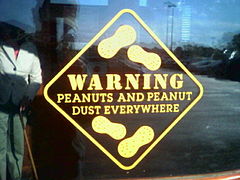
A warning sign for the presence of peanuts and peanut grit
-

Arachis hypogaea flower
-
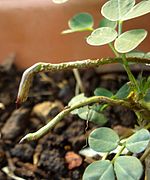
Peanut pegs penetrating the ground
-

Textural detail
-

Developing pods of peanut
-

Track-blazon peanut harvester
-
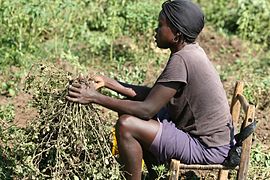
Harvesting peanuts by hand (Haiti, 2012)
-
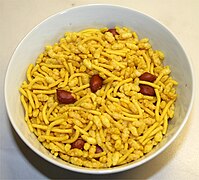
A basin of sev mamra, consisting of puffed rice, peanuts and fried seasoned noodles
See also
- African Groundnut Council
- BBCH-scale (peanut)
- Beer Basics
- Columbian commutation
- Cracker nuts
- Ground nut soup
- List of peanut dishes
- List of edible seeds
- Peanut pie
- Power snack
- Tanganyika groundnut scheme, a failure started in 1951
- Universal Nut Sheller
References
- ^ a b c "The Plant List: A Working Listing of All Plant Species". Royal Botanic Gardens, Kew and Missouri Botanical Garden. 2013. Retrieved February thirteen, 2015.
- ^ USDA GRIN Taxonomy , retrieved June 29, 2016
- ^ a b Domonoske, Camila (April twenty, 2014). "A Legume With Many Names: The Story Of 'Goober'". NPR. National Public Radio. Archived from the original on June 6, 2020.
- ^ "Grain Legumes". www.hort.purdue.edu . Retrieved September 29, 2015.
- ^ "Oil crops for production of advanced biofuels". European Biofuels Technology Platform. Archived from the original on September 9, 2015. Retrieved September 28, 2015.
- ^ a b "Legumes Of The World | Imperial Botanic Gardens, Kew". www.kew.org . Retrieved September 29, 2015.
- ^ "The Peanut Institute – Peanut Facts". peanut-found.org. Archived from the original on April 8, 2019.
- ^ a b c d Seijo, Guillermo; Graciela I. Lavia; Aveliano Fernandez; Antonio Krapovickas; Daniel A. Ducasse; David J. Bertioli; Eduardo A. Moscone (December 1, 2007). "Genomic relationships betwixt the cultivated peanut (Arachis hypogaea, Leguminosae) and its close relatives revealed by double GISH". American Journal of Botany. 94 (12): 1963–1971. doi:10.3732/ajb.94.12.1963. PMID 21636391.
- ^ a b Kochert, Gary; Stalker, H. Thomas; Gimenes, Marcos; Galgaro, Leticia; Lopes, Catalina Romero; Moore, Kim (October one, 1996). "RFLP and Cytogenetic Testify on the Origin and Evolution of Allotetraploid Domesticated Peanut, Arachis hypogaea (Leguminosae)". American Journal of Botany. 83 (10): 1282–1291. doi:10.2307/2446112. JSTOR 2446112.
- ^ Moretzsohn, Márcio C.; Gouvea, Ediene Yard.; Inglis, Peter W.; Leal-Bertioli, Soraya C.1000.; Valls, José F.Yard.; Bertioli, David J. (January 1, 2013). "A report of the relationships of cultivated peanut (Arachis hypogaea) and its about closely related wild species using intron sequences and microsatellite markers". Register of Botany. 111 (i): 113–126. doi:10.1093/aob/mcs237. ISSN 0305-7364. PMC3523650. PMID 23131301.
- ^ a b c d Krapovickas, Antonio; Gregory, Walton C. (2007). translated by David Due east. Williams and Charles E. Simpson. "Taxonomy of the genus Arachis (Leguminosae)" (PDF). IBONE. 16 (Supl.): 1–205. Archived from the original (PDF) on March 4, 2016. Retrieved September xiii, 2016.
- ^ Dillehay, Tom D. "Earliest-known evidence of peanut, cotton and squash farming found". Retrieved June 29, 2007.
- ^ Berrin, Katherine & Larco Museum. The Spirit of Ancient Peru: Treasures from the Museo Arqueológico Rafael Larco Herrera. New York: Thames & Hudson, 1997.
- ^ a b c d "Peanut (groundnuts with shell) product in 2019". FAOSTAT, Food and Agronomical Arrangement of the United Nations, Statistics Sectionalisation. 2020. Retrieved Feb 28, 2021.
- ^ a b c d e Putnam, D.H., et al. (1991) Peanut. Academy of Wisconsin-Extension Cooperative Extension: Alternative Field Crops Manual.
- ^ Michaud, Jon (Nov 28, 2012). "A chunky history of peanut butter". www.newyorker.com. New Yorker. Archived from the original on March 31, 2017. Retrieved May 9, 2017.
- ^ a b c Smith, Ben W. (Jan 1, 1950). "Arachis hypogaea. Aerial Flower and Subterranean Fruit". American Journal of Phytology. 37 (10): 802–815. doi:10.2307/2437758. JSTOR 2437758.
- ^ a b c Baughman, Todd; Grichar, James; Black, Mark; Woodward, Jason; Porter, Pat; New, Leon; Baumann, Paul; McFarland, Mark "Texas Peanut Production Guide" (PDF). Texas A&M University. Retrieved October 16, 2015
- ^ a b Schilling, Robert (February five, 2003). "L'arachide histoire et perspectives". L'arachide histoire et perspectives. Agropolis Museum. Retrieved October xvi, 2015.
- ^ Jauron, Richard (February v, 1997). "Growing Peanuts in the Abode Garden | Horticulture and Home Pest News". Ipm.iastate.edu. Retrieved May 30, 2011.
- ^ Marsalis, Mark; Puppala, Naveen; Goldberg, Natalie; Ashigh, Jamshid; Sanogo, Soumaila; Trostle, Calvin (July 2009). "New United mexican states Peanut Production" (PDF). Circular-645. New Mexico Country University. Retrieved Oct 16, 2015.
- ^ "Peanut". www.hort.purdue.edu . Retrieved October 16, 2015.
- ^ a b c "How peanuts are Grown – Harvesting – PCA". Peanut Company of Australia. Archived from the original on July 19, 2008. Retrieved May 30, 2011.
- ^ Willy H. Verheye, ed. (2010). "Growth and Production of Groundnuts". Soils, Plant Growth and Crop Production Book Two. EOLSS Publishers. p. 153. ISBN978-one-84826-368-0.
- ^ a b c Bilello, Stanley (Oct 10, 2016). 21st Century Homestead: Nitrogen-Fixing Crops. Lulu.com. pp. 93–94. ISBN9781365452901. [ self-published source ]
- ^ a b c Ruark, Elinor. "Peanut Cultivars and Descriptions". caes2.caes.uga.edu . Retrieved Nov 22, 2016.
- ^ "naomi chapman woodroof; Programs & People Summertime 2000". www.cals.uidaho.edu . Retrieved April nine, 2021.
- ^ Boiled Peanuts Questions and Answers at The Lee Bros. Catalogue. Retrieved thirty October 2011.
- ^ "Food Allergen Labeling and Consumer Protection Act of 2004 (Public Law 108-282, Title 2)". Fda.gov. Retrieved May 30, 2011.
- ^ "U.S. Exports of (NAICS 311911) Roasted Nuts & Peanut Butter With All Countries]". The states Census Bureau. 2012. Archived from the original on June 19, 2015.
- ^ Chakravorty, Rup. "Breeding a better peanut butter". American Society of Agronomy. Archived from the original on November x, 2015. Retrieved October 15, 2015.
- ^ Wang, Qiang (2016). Peanuts: processing technology and product development. London: Academic Press, Elsevier. doi:10.1016/C2015-0-02292-4. ISBN978-0-12-809595-ix. OCLC 951217525.
- ^ "Gastronomía de Huánuco - Platos típicos - Pachamanca Picante de cuy". www.huanuco.com . Retrieved October 26, 2015.
- ^ "Menú, recetas, cocina, nutricion | Menú Perú". menuperu.elcomercio.pe . Retrieved October 26, 2015.
- ^ "Demystifying mole, Mexico's national dish". www.mexconnect.com . Retrieved August 20, 2010.
- ^ a b Ghanaian cuisine
- ^ "Ebinyebwa; a tale of the Ugandan groundnut stew". Daily Monitor/Monitor Publications Ltd, Kampala, Uganda. Apr viii, 2008. Retrieved December 28, 2015.
- ^ "Peanuts in Canada". Peanut Agency of Canada. 2017. Retrieved Dec 6, 2017.
- ^ Karina Martinez-Carter (February xiv, 2014). "As American as peanut butter". Pacific Standard. Retrieved December 6, 2017.
- ^ a b "History of Peanuts & Peanut Butter". US National Peanut Board. 2017. Retrieved December 6, 2017.
- ^ "The history of peanut soup". The Virginia Marketplace. September 19, 2012. Retrieved December vi, 2017.
- ^ "16 Fun Facts most Peanuts & Peanut Butter; Number 13". US National Peanut Board. 2017. Retrieved December 6, 2017.
- ^ Raymond, Bret. "Rwaza Health Centre: Efficacy Written report Results" (PDF). MANA Nutrition. Retrieved July xv, 2011.
- ^ "Meds & Food For Kids :: — Medika Mamba". mfkhaiti.org. Archived from the original on April 8, 2010. Retrieved April 23, 2010.
- ^ Heuzé V., Thiollet H., Tran K., Lebas F., 2017. Peanut forage. Feedipedia, a plan by INRA, CIRAD, AFZ and FAO. https://www.feedipedia.org/node/695
- ^ Deshpande, Due south. Southward. (2000). Fermented Grain Legumes, Seeds and Nuts. ISBN9789251044445 . Retrieved May 25, 2015.
- ^ "Palm kernel meal as a feed for poultry. 1. Composition of palm". Periodical of Animal feed scientific discipline . Retrieved May 25, 2015.
- ^ "3. Feed values and feeding potential of major agro-byproducts". fao.org . Retrieved May 25, 2015.
- ^ Heuzé V., Thiollet H., Tran Thou., Bastianelli D., Lebas F., 2017. Peanut seeds. Feedipedia, a programme by INRA, CIRAD, AFZ and FAO. https://www.feedipedia.org/node/55
- ^ Heuzé V., Thiollet H., Tran Grand., Edouard North., Bastianelli D., Lebas F., 2017. Peanut hulls. Feedipedia, a programme past INRA, CIRAD, AFZ and FAO. https://www.feedipedia.org/node/696
- ^ "Nutrition facts for peanuts, all types, raw, USDA Nutrient Data". Conde Nast, USDA National Nutrient Database, version SR-21. 2014. Retrieved Jan 15, 2015.
- ^ Bao, Ying; Han, Jiali; Hu, Frank B.; Giovannucci, Edward L.; Stampfer, Meir J.; Willett, Walter C.; Fuchs, Charles S. (November 21, 2013). "Clan of Nut Consumption with Total and Cause-Specific Mortality". New England Journal of Medicine. 369 (21): 2001–2011. doi:ten.1056/NEJMoa1307352. ISSN 0028-4793. PMC3931001. PMID 24256379.
- ^ a b "Nuts (including peanuts)". Micronutrient Information Heart. Corvallis, OR: Linus Pauling Institute, Oregon State Academy. 2009. Retrieved November 29, 2016.
- ^ Taylor CL (July xiv, 2003). "Qualified Wellness Claims: Letter of Enforcement Discretion – Nuts and Coronary Heart Illness (Docket No 02P-0505)". Middle for Nutrient Safe and Applied Nutrition, FDA. Retrieved Oct xiv, 2015.
- ^ Tredgold, Margaret H. (1986). Food plants of Republic of zimbabwe. Natural History Museum of Zimbabwe Library: Mambo Press. p. 36. ISBN9780869224007.
- ^ "Resveratrol". Micronutrient Data Center. Corvallis, OR: Linus Pauling Institute, Oregon State University. 2016.
- ^ Sales, J. K.; Resurreccion, A. V. (2014). "Resveratrol in peanuts". Disquisitional Reviews in Food Science and Diet. 54 (6): 734–seventy. doi:10.1080/10408398.2011.606928. PMID 24345046. S2CID 13183809.
- ^ "Nutrition facts for oil, peanut, salad or cooking, USDA Nutrient Data". Conde Nast, USDA National Nutrient Database, version SR-21. 2014. Retrieved January 15, 2015.
- ^ Ozcan MM (2010). "Some nutritional characteristics of kernel and oil of peanut (Arachis hypogaea Fifty.)". J Oleo Sci. 59 (1): i–five. doi:10.5650/jos.59.i. PMID 20032593.
- ^ Shi Fifty, Lu JY, Jones G, Loretan PA, Hill WA (1998). "Characteristics and limerick of peanut oil prepared by an aqueous extraction method". Life Support Biosph Sci. 5 (two): 225–9. PMID 11541680.
{{cite periodical}}: CS1 maint: uses authors parameter (link) - ^ "Food Allergy Quick Facts". National Institute of Allergy and Infectious Diseases. February 24, 2012. Retrieved January 30, 2014.
- ^ "Peanut Allergy on the Ascension: Why?". WebMD. May fourteen, 2010. Retrieved May 18, 2010.
- ^ Food allergy advice may be peanuts, Science News, December half dozen, 2008
- ^ Høst, A; Halken, Due south; Muraro, A; Dreborg, S; Niggemann, B; Aalberse, R; Arshad, SH; Von Berg, A; et al. (2008). "Dietary prevention of allergic diseases in infants and small children". Pediatric Allergy and Immunology. 19 (1): one–4. doi:x.1111/j.1399-3038.2007.00680.10. PMID 18199086. S2CID 8831420.
- ^ a b Lack 1000, Fox D, Northstone K, Golding J (2003). "Factors Associated with the Development of Peanut Allergy in Babyhood". New England Journal of Medicine. 348 (xi): 977–85. doi:ten.1056/NEJMoa013536. PMID 12637607. S2CID 13280248.
- ^ Hartocollis, Anemona (September 23, 1998). "Nada's Condom: Some Schools Ban Peanut Butter as Allergy Threat". The New York Times . Retrieved August 18, 2009.
- ^ Nevius, C.West. (September 9, 2003). "One 5-year-former's allergy leads to class peanut ban". San Francisco Chronicle . Retrieved August 18, 2009.
- ^ "School peanut ban in need of review". Nashua Telegraph. September 14, 2008. Retrieved August 18, 2009.
- ^ Cherkaoui, Sabrine; Ben-Shoshan, Moshe; Alizadehfar, Reza; Asai, Yuka; Chan, Edmond; Cheuk, Stephen; Shand, Greg; St-Pierre, Yvan; Harada, Laurie (Jan 1, 2015). "Accidental exposures to peanut in a big accomplice of Canadian children with peanut allergy". Clinical and Translational Allergy. 5: xvi. doi:10.1186/s13601-015-0055-x. ISSN 2045-7022. PMC4389801. PMID 25861446.
- ^ "The anaphylaxis campaign: peanut oil". Anaphylaxis.org.united kingdom. Archived from the original on April xviii, 2008. Retrieved August 18, 2009.
- ^ Hoffman DR, Collins-Williams C (1994). "Cold-pressed peanut oils may contain peanut allergen". The Journal of Allergy and Clinical Immunology. 93 (4): 801–ii. doi:10.1016/0091-6749(94)90262-3. PMID 8163791.
- ^ Hourihane JO, Bedwani SJ, Dean TP, Warner JO (1997). "Randomised, double blind, crossover challenge study of allergenicity of peanut oils in subjects allergic to peanuts". BMJ. 314 (7087): 1084–8. doi:x.1136/bmj.314.7087.1084. PMC2126478. PMID 9133891.
- ^ Hirano, South; Shima, T; Shimada, T (August 2001). "[Proportion of aflatoxin B1 contaminated kernels and its concentration in imported peanut samples]". Shokuhin Eiseigaku Zasshi. 42 (4): 237–42. doi:10.3358/shokueishi.42.237. PMID 11817138.
- ^ 7 CFR 2011 – Function 996a[ full commendation needed ]
- ^ "Why Georgia farmers decided to shell their ain peanuts". New Food Economy. April 26, 2017. Retrieved July 4, 2019.
Source: https://en.wikipedia.org/wiki/Peanut

Post a Comment for "Family Owned Homemade Peanut Brittle Made in Eagle Pass Texas"